
Calculate Riser Height (Option 1)
From How to Measure Stair Rise and Run · Step 3 of 6 · Video by stairbuilding
Showing 1:03–1:44 of the source video. Watch the full video with every moment.
What happens in this clip
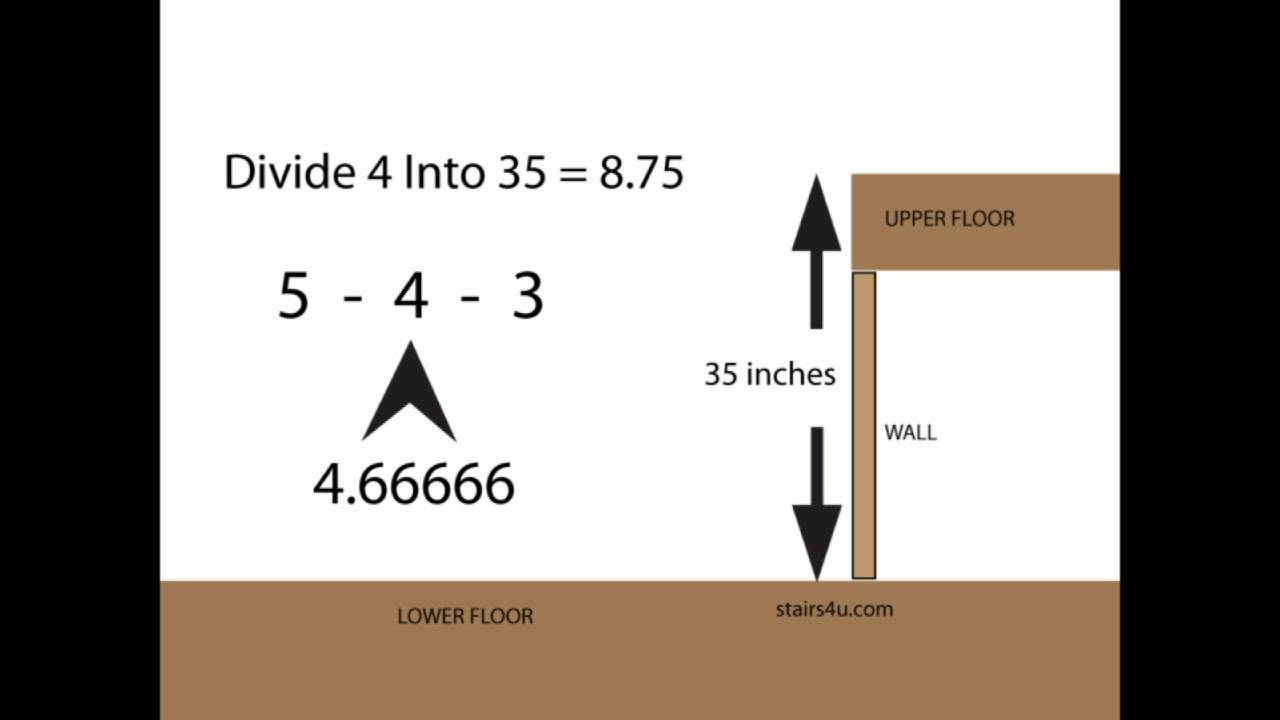
Take the total rise (35 inches) and divide it by a whole number slightly higher than your approximate riser count (e.g., 5, since 4.66666 is closest to 5 when rounding up). In this example, 35 inches divided by 5 risers equals 7 inches per riser. A riser height of 7 inches is considered acceptable, typically falling within the comfortable range of 7 to 8 inches, and ideally between 7.25 and 7.75 inches for optimal comfort. This calculation determines a possible, comfortable, and potentially code-compliant individual riser height.
Goal: Find a comfortable and potentially code-compliant individual riser height
What's used
Tools
- Calculator
About the full video
This instructional guide details the process of accurately calculating the number and individual height of stair risers, ensuring they meet building codes for safety and comfort. The method involves measuring the total vertical rise, estimating the number of risers using an average height, and then testing different whole numbers of risers against the total rise to determine compliant and comfortable individual riser heights.
Step 3 of 6: Determine Actual Riser Height
Using the total rise and the rounded number of risers from the previous step, divide the total rise by the number of risers to calculate the precise height of each individual riser. For the example of a 100-inch total rise and 13 risers, the actual riser height would be 100 inches / 13 risers = approximately 7.69 inches per riser.
Every video in How to Measure Stair Rise and Run
Step 1: Determine Total Rise
- 0:04–0:30 Measure Total Rise
- 2:54–4:34 Determine the Total Rise
- 0:54–1:25 Calculate Final Total Rise
Step 2: Calculate Ideal Riser Height
- 0:29–1:07 Calculate Rise and Run
- 4:32–5:10 Calculate Individual Riser Height
- 0:28–1:03 Calculate Approximate Number of Risers
Step 3: Determine Actual Riser Height
- 4:32–5:10 Calculate Individual Riser Height
- 1:03–1:44 Calculate Riser Height (Option 1) (this video)
- 0:28–1:03 Calculate Approximate Number of Risers
Step 4: Determine Number of Treads (Steps)
- 0:54–1:13 Determine Number of Treads
- 3:54–5:04 Calculate the Number of Treads and Understand the Logic
- 8:59–9:54 Calculate Number of Risers and Treads
Step 5: Measure Total Run
- 1:31–2:57 Calculate Unit Run and Total Run
- 1:13–1:29 Calculate Total Run
- 9:54–10:28 Determine Tread Run and Total Run
Step 6: Calculate Actual Tread Run
- 0:29–1:07 Calculate Rise and Run
- 1:31–2:57 Calculate Unit Run and Total Run
- 10:55–11:31 Calculate Overall Run (Treads)
How to Measure Stair Rise and Run
This project outlines the process for accurately measuring the rise and run of stairs, a critical step in stair construction, renovation, or repair.
Read the full guide Browse all guides
Planning this project? Shop Oak Valley Designs.

Subscribe for exclusive updates
Be the first to know about promotions, new products, and sales.