

How to Choose and Install Wool vs Synthetic Carpet Treads
About This Guide
A high-level outline for choosing and installing carpet treads, covering material selection (wool vs. synthetic) and the installation process.
Tools & Materials
Nance Carpet and Rug Peel and Stick Charcoal 8 in. x 18 in. Stair Tread Cover (Set of 13) 17668
Nance Carpet and Rug Peel and Stick Charcoal 8 in. x 18 in. Stair Tread Cover (Set of 13) 17668
Steps

Choose Carpet Tread Material
Evaluate the pros and cons of wool treads (natural, luxurious, durable but prone to staining and higher cost) versus synthetic treads (stain-resistant, durable, cost-effective, and available in many styles). Consider the traffic patterns in your home and your desired aesthetic to make an informed decision.
Measure Staircase Dimensions
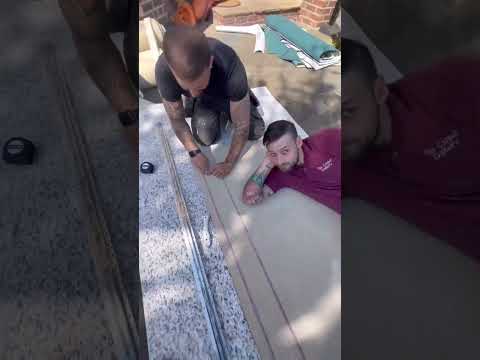
Using a tape measure, record the exact width of each stair tread from the front edge to the wall or edge of the adjacent tread. Then, measure the depth of each tread from the nosing (front edge) to the riser (vertical part of the step). It's crucial to measure each tread individually, as stair dimensions can vary slightly.

Purchase Carpet Treads
Based on your measurements, order the carpet treads. If purchasing pre-made treads, ensure the dimensions match your staircase. If ordering custom treads, provide your exact measurements to the manufacturer. Account for any pattern matching if your treads have a specific design.

Clean Stair Treads
Vacuum the stairs thoroughly to remove all loose dirt, dust, and debris. If the existing treads are dirty or have stains, clean them with an appropriate carpet cleaner or degreaser. Ensure the stairs are completely dry before proceeding to the next step. For wooden stairs, ensure any old finishes or residues are removed for better adhesion.
Apply Adhesive
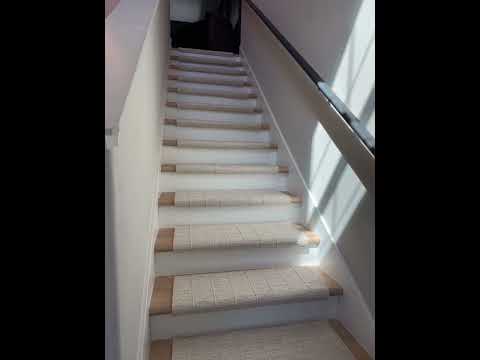
Follow the manufacturer's instructions for your chosen carpet treads regarding adhesive application. Some treads come with self-adhesive backing, while others require a separate adhesive. If using a separate adhesive, apply a consistent, even layer to the back of the carpet tread or to the stair tread itself, ensuring full coverage without excessive pooling. Use a notched trowel for even spreading if recommended by the adhesive manufacturer.
Install Carpet Treads
Starting from the bottom stair, carefully align the carpet tread with the front edge (nosing) and side edges of the stair tread. Press down firmly, working from the center outwards to eliminate any air bubbles and ensure good contact with the adhesive. Use a roller or your hands to apply even pressure across the entire surface of the tread. Repeat for each stair, ensuring each tread is aligned with the previous one for a uniform appearance.
Trim Excess Material
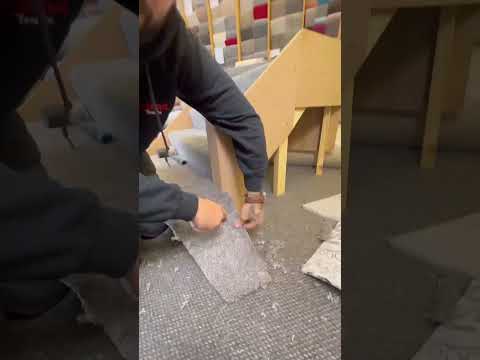
Once the treads are in place and the adhesive has begun to set, carefully inspect the edges. If there is any excess carpet material that extends beyond the stair tread, use a sharp utility knife or carpet shears to trim it neatly. Cut along the edge of the stair tread, ensuring a precise and clean line.

Allow Adhesive to Cure
Refer to the adhesive manufacturer's instructions for the recommended curing time. This can range from a few hours to 24-48 hours. Avoid walking on the stairs or placing heavy objects on the treads during this period to ensure the adhesive bonds properly and the treads remain securely in place.
Questions about your project or which product fits? Oak Valley Designs's team is happy to help. Mon–Fri 9–5 ET
Related Guides
See All
How to Update Rental Stairs with Removable Carpet Treads
How to Update a Spiral Staircase

How to Put Carpet Treads on Already-Carpeted Stairs

How to Fix Popping Noises from Adhesive Carpet Treads on Wood Stairs

Subscribe for exclusive updates
Be the first to know about promotions, new products, and sales.